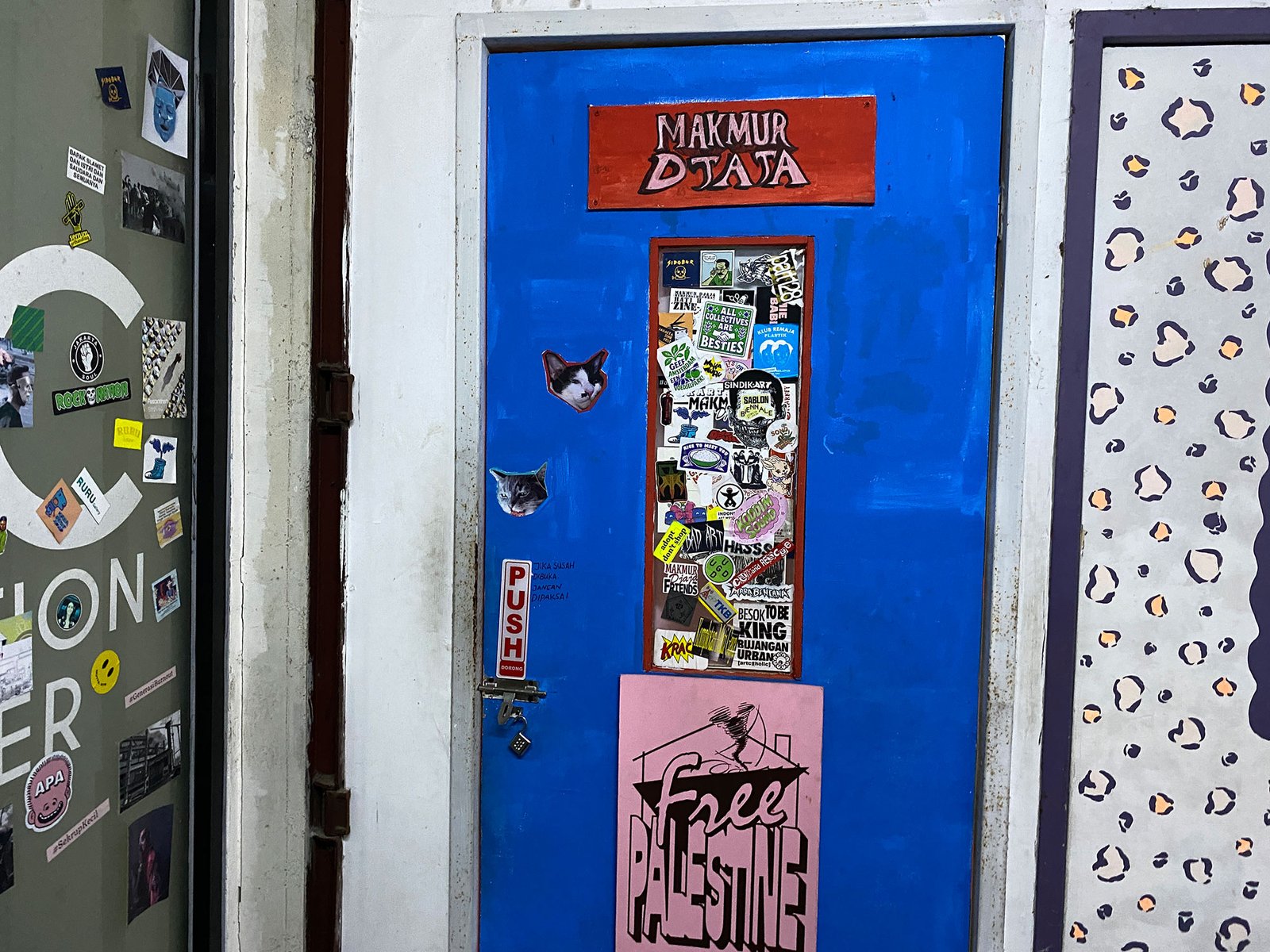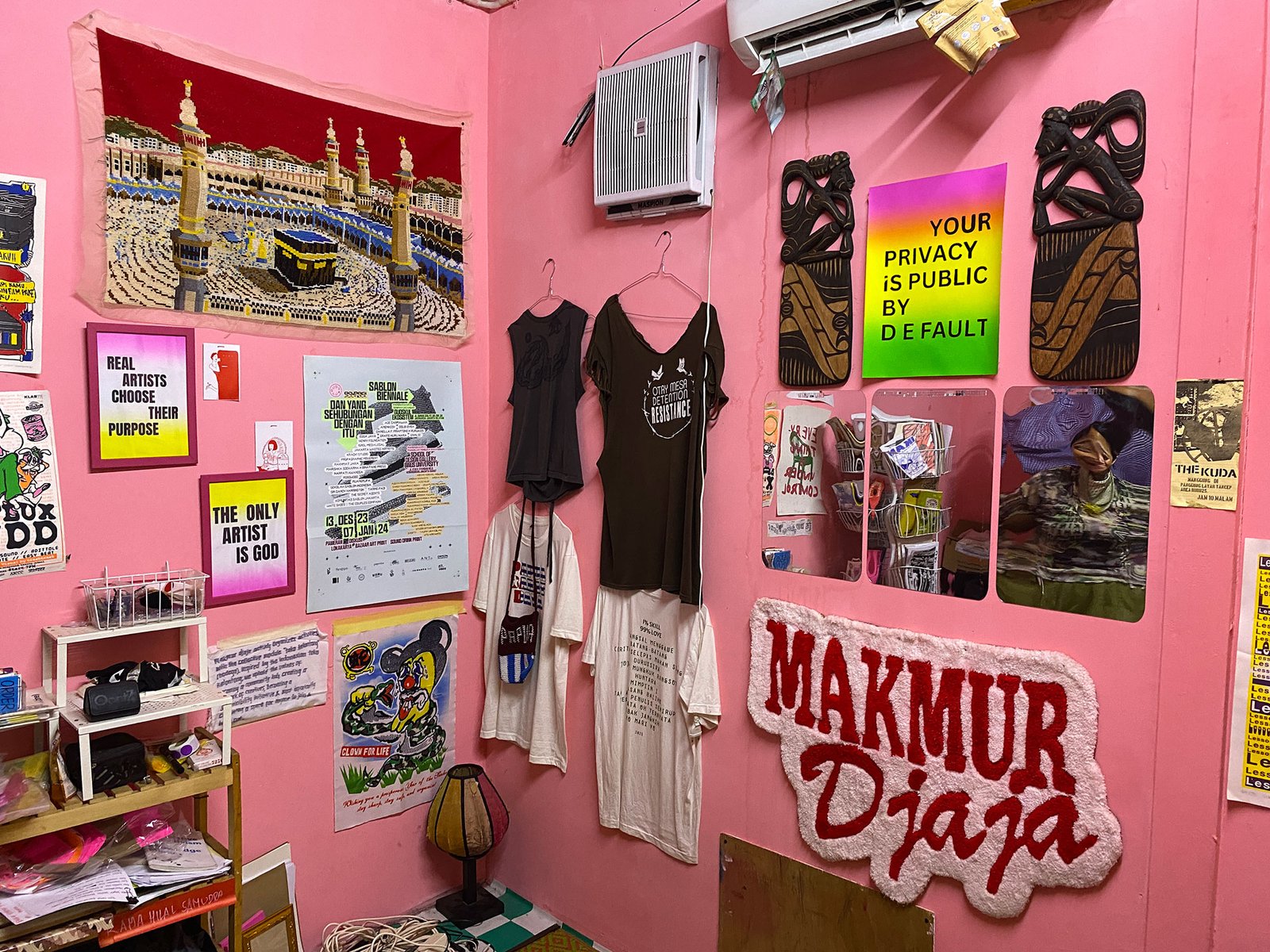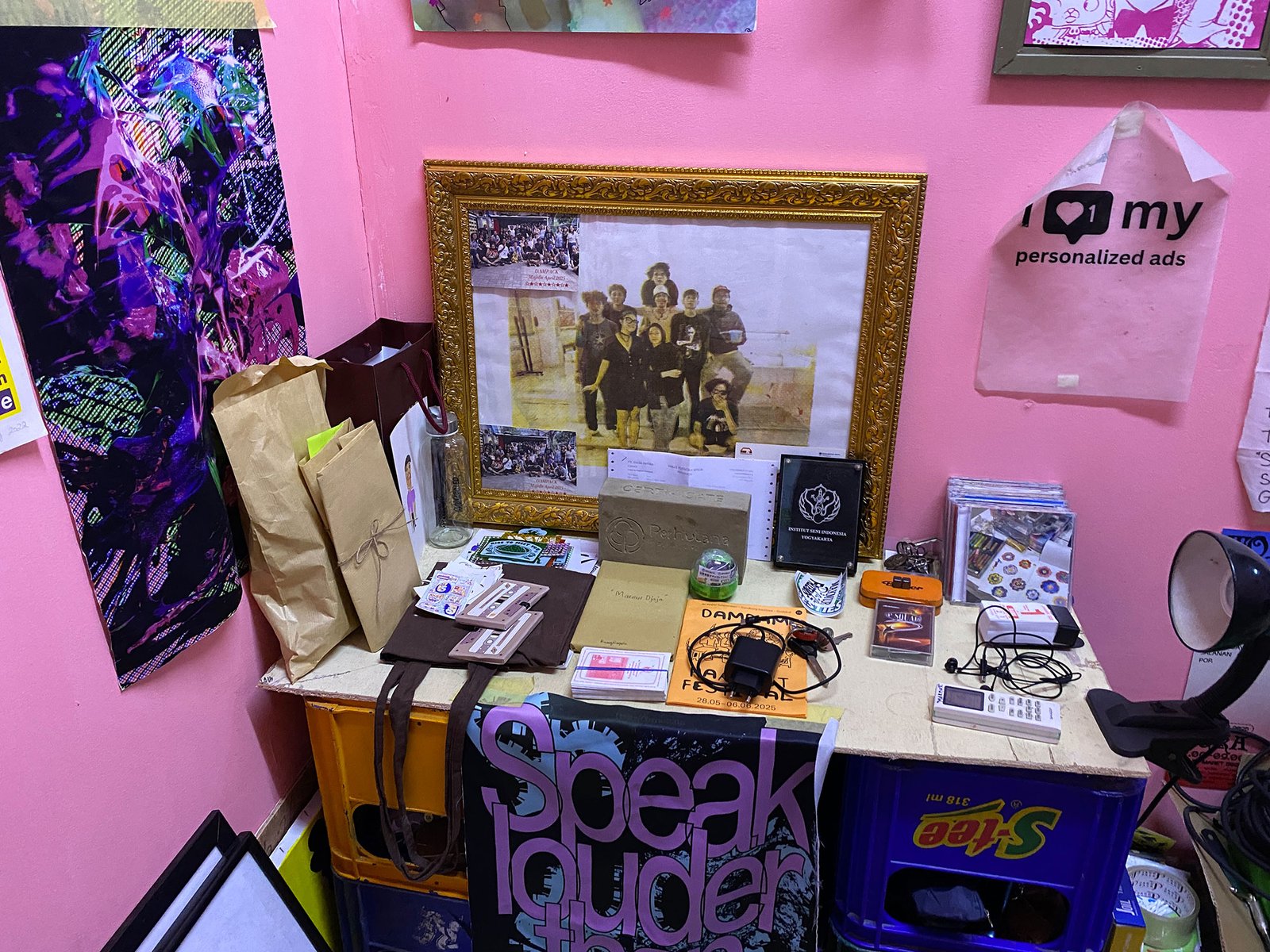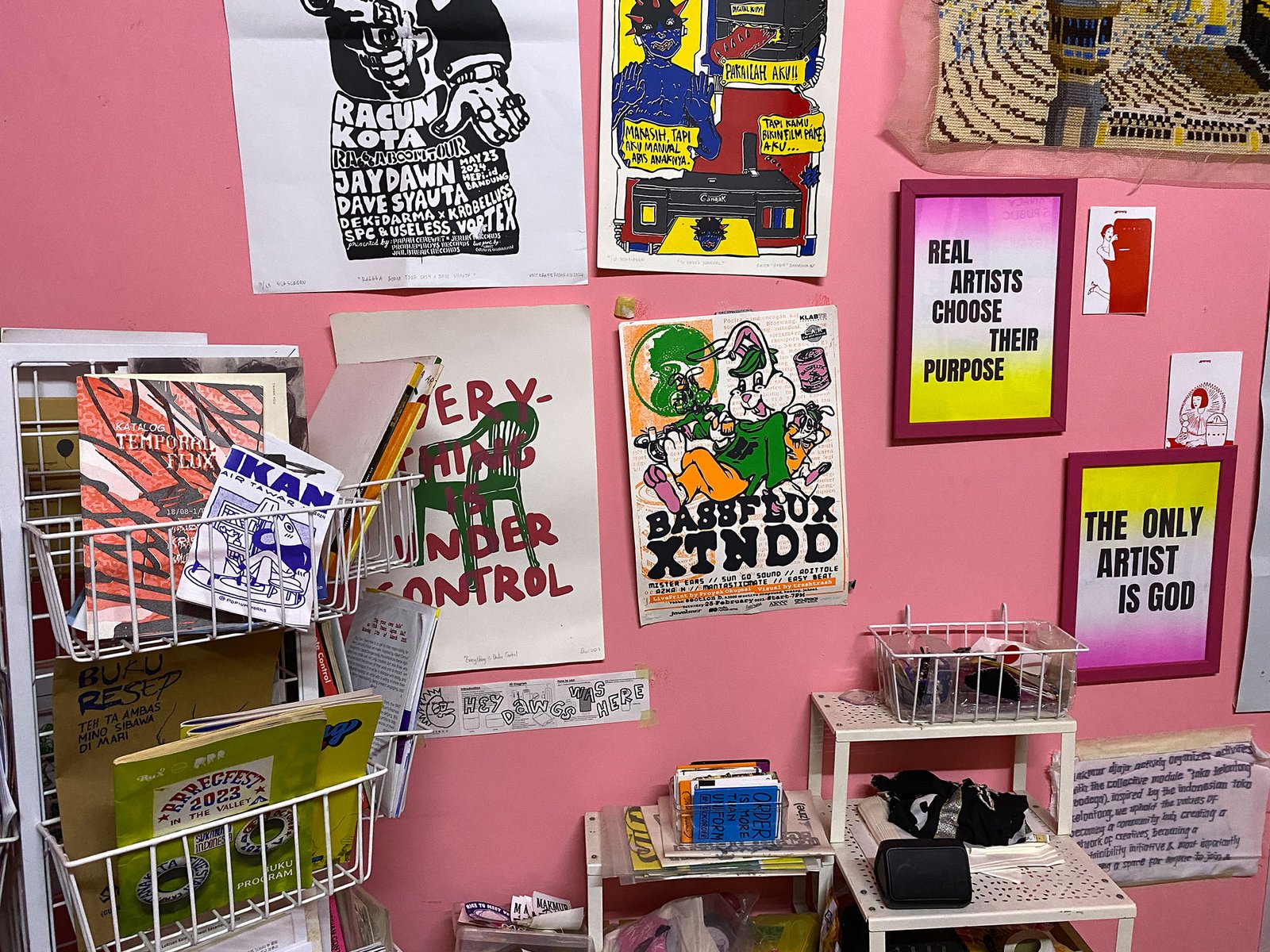
Over the past two years, the number of young people coming to Gudskul has been steadily increasing. This new wave cannot be separated from the role of Makmur Djaja, a group of students from the Jakarta Institute of the Arts (IKJ) who boldly decided to rent one of the studios at Gudside in August 2023. Not long after, they held an open studio to introduce themselves to the Gudskul ecosystem. The opening night turned out to be packed with fellow students, and since then, the presence of young people at Gudskul has become more noticeable—though still occurring periodically during certain moments.
Their decision to rent a studio at Gudskul stemmed from a desire to find a more open and independent learning space. For them, the campus was no longer an exciting place, with academic routines that often emphasized “truth” and “beauty” in art. Gudskul, on the other hand, was seen as an alternative space that could expand their imagination—a place where mistakes and “ugly” works still hold value and meaning.
In addition to opening their studio at Gudside, Makmur Djaja also began their involvement by joining Gudskul Collective Study Batch 6 (2024–2026). Gradually, they became more than just participants—they became part of the driving force within the program, helping to organize activities such as Jakarta 32°C, OK. Video Get.raw, and Ruru Radio Lounge, as well as contributing to Gudskul’s artistic and entertainment initiatives.
As participants based in Jakarta, Makmur Djaja naturally took on the role of companions for those coming from other cities. They served as a bridge between the participants and both the Gudskul ecosystem and the broader cultural landscape of Jakarta. Their presence became a catalyst in maintaining the group’s cohesion, even though most of the Batch 6 participants came from more established collectives and were several years older than the members of Makmur Djaja.
Makmur Djaja’s presence also revived Jakarta 32°C, a long-running forum for art students across Jakarta. The revival coincided with the National Culture Week 2023, where they were invited to become the main organizers of Jakarta 32°C through an initiative called Tarkam AKAP. By connecting students from various campuses, their network of peers grew even wider—and they came to call it “Makmur and Friends.”
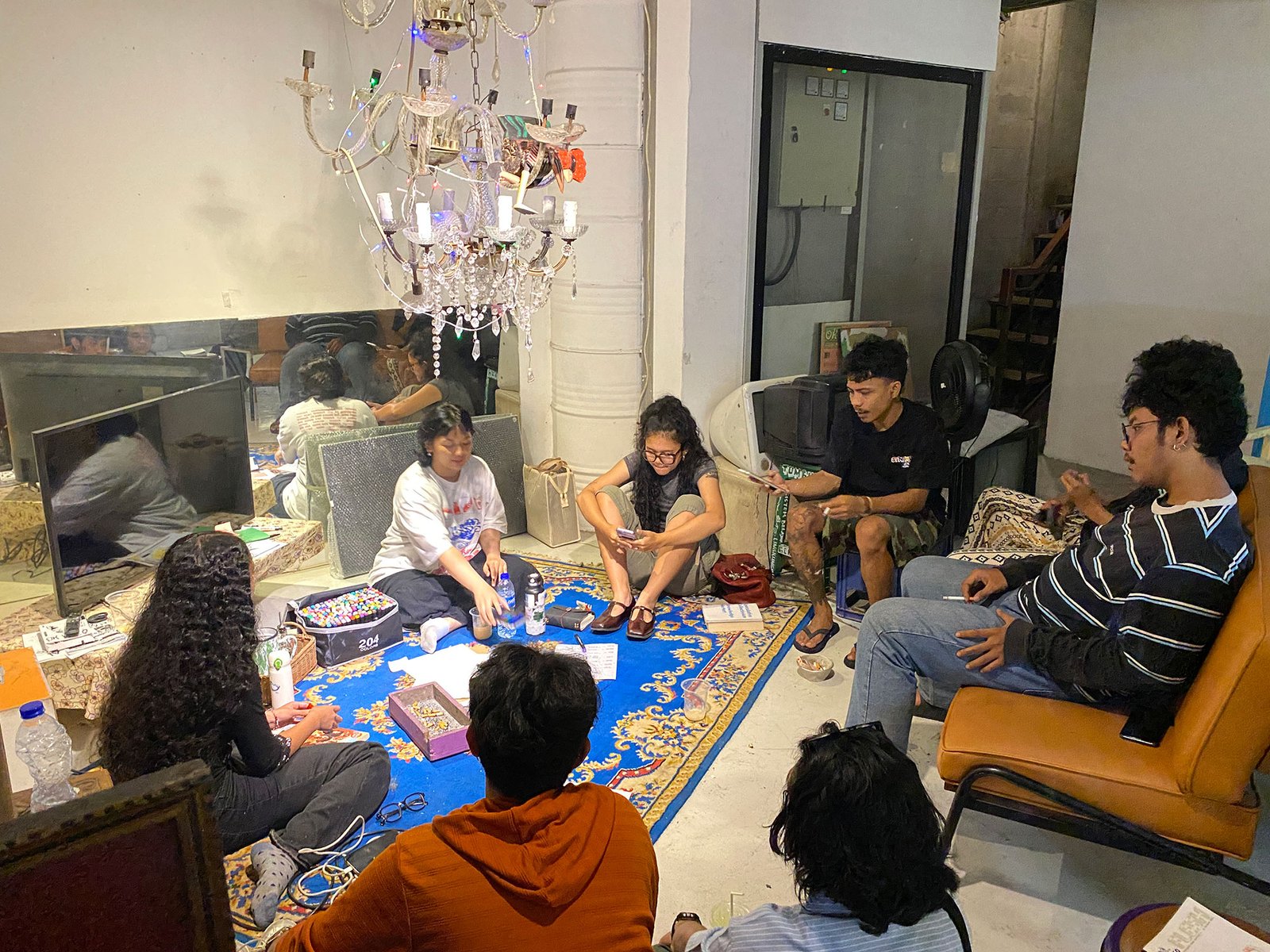
Gudskul has since become a gathering space for the Jakarta 32°C forum, while the Makmur Djaja studio has turned into a 24-hour hangout and resting place for students—often serving as a first point of contact before they feel comfortable engaging more directly with the Gudskul ecosystem. For many, this studio became a meeting ground, a place to adapt, and the first step toward deeper involvement in Gudskul’s programs and community life.
These activities were not limited to Gudskul’s regular programs but also included independent and responsive initiatives. One example is the virtual poster exhibition “Peringatan Darurat” (State of Emergency)—a response to mass demonstrations in 2024, which was later restaged in 2025 in relation to the ongoing Reset Indonesia 2025 movement. The exhibition was organized under OK. Video Get.raw and featured multimedia performances.
Through initiatives like “Nongkrong and Book Club”, they also invited their peers to read and discuss global issues—one of which was Palestine. Through these sessions, they not only learned to understand global situations but also cultivated empathy and awareness of their position as part of a generation living within an ever-evolving global landscape.
Before the arrival of Makmur and Friends, Gudskul often felt quiet, as many of its members had already developed diverse life priorities. Their presence brought daily life back into motion—reanimating Gudskul not only physically but also spiritually—rekindling a sense of regeneration and reminding everyone that this ecosystem continues to grow alongside the generations that come and go.
Angga Wijaya
Subjct Coordinator Gudskul Collective Study