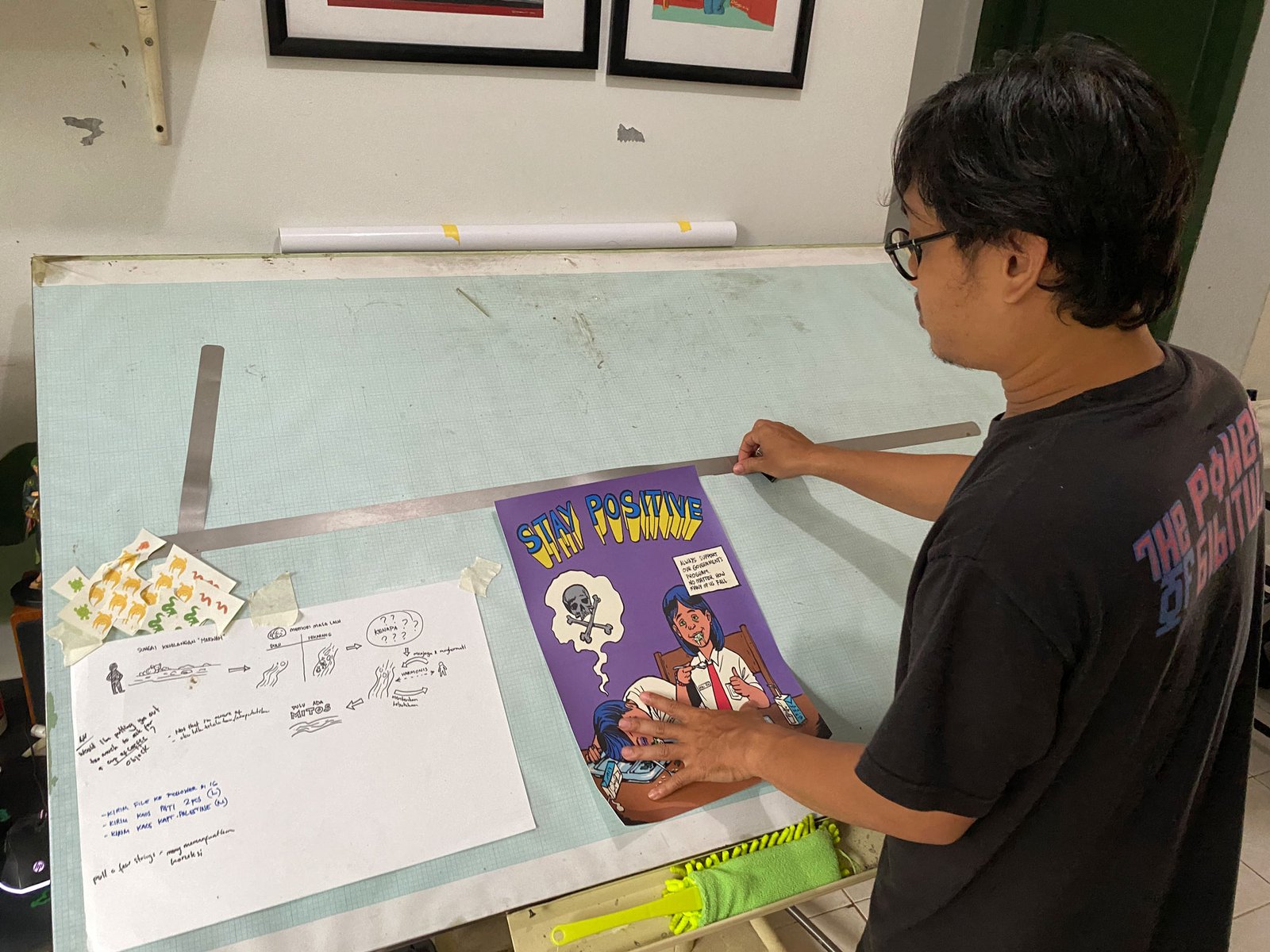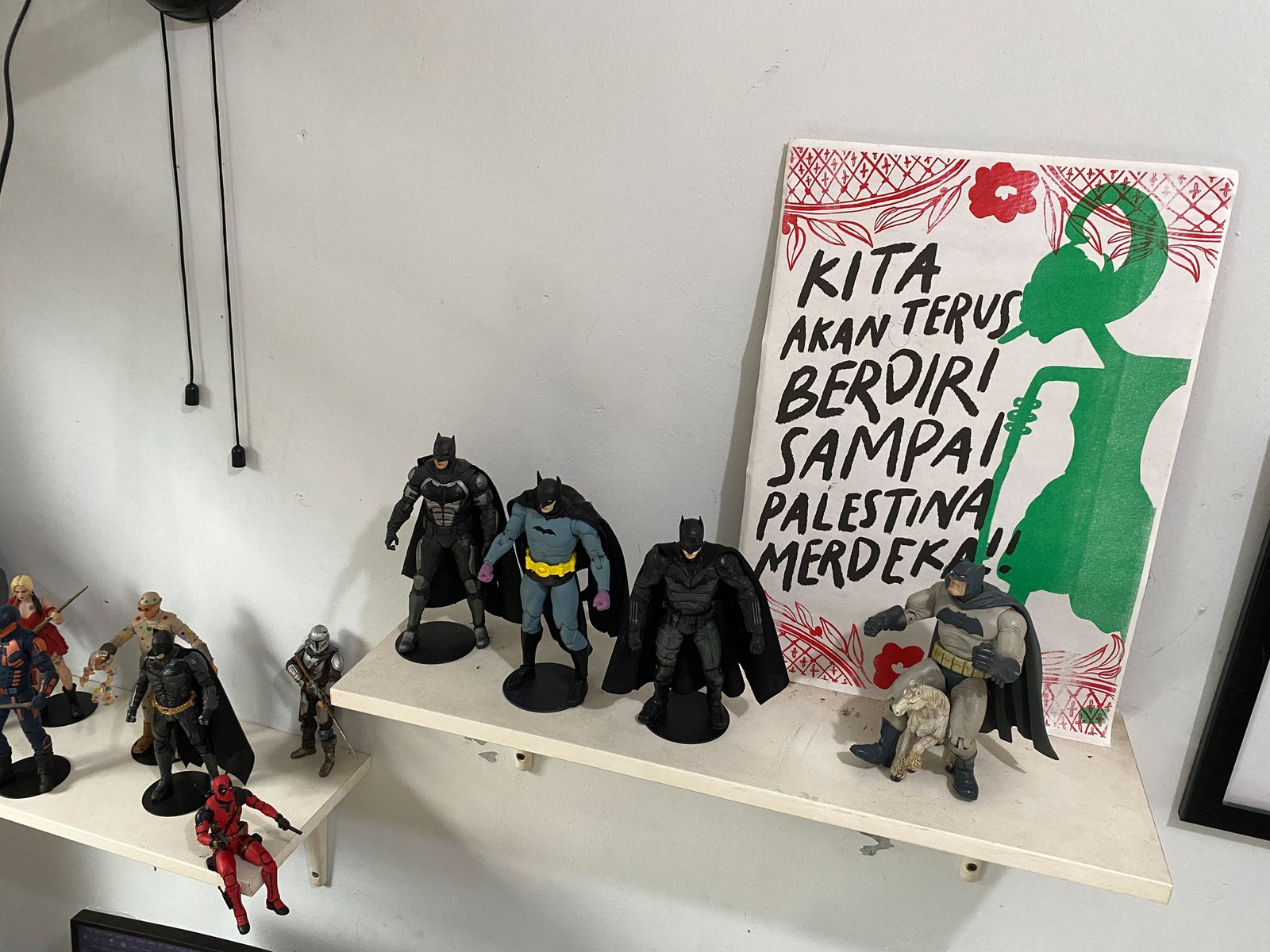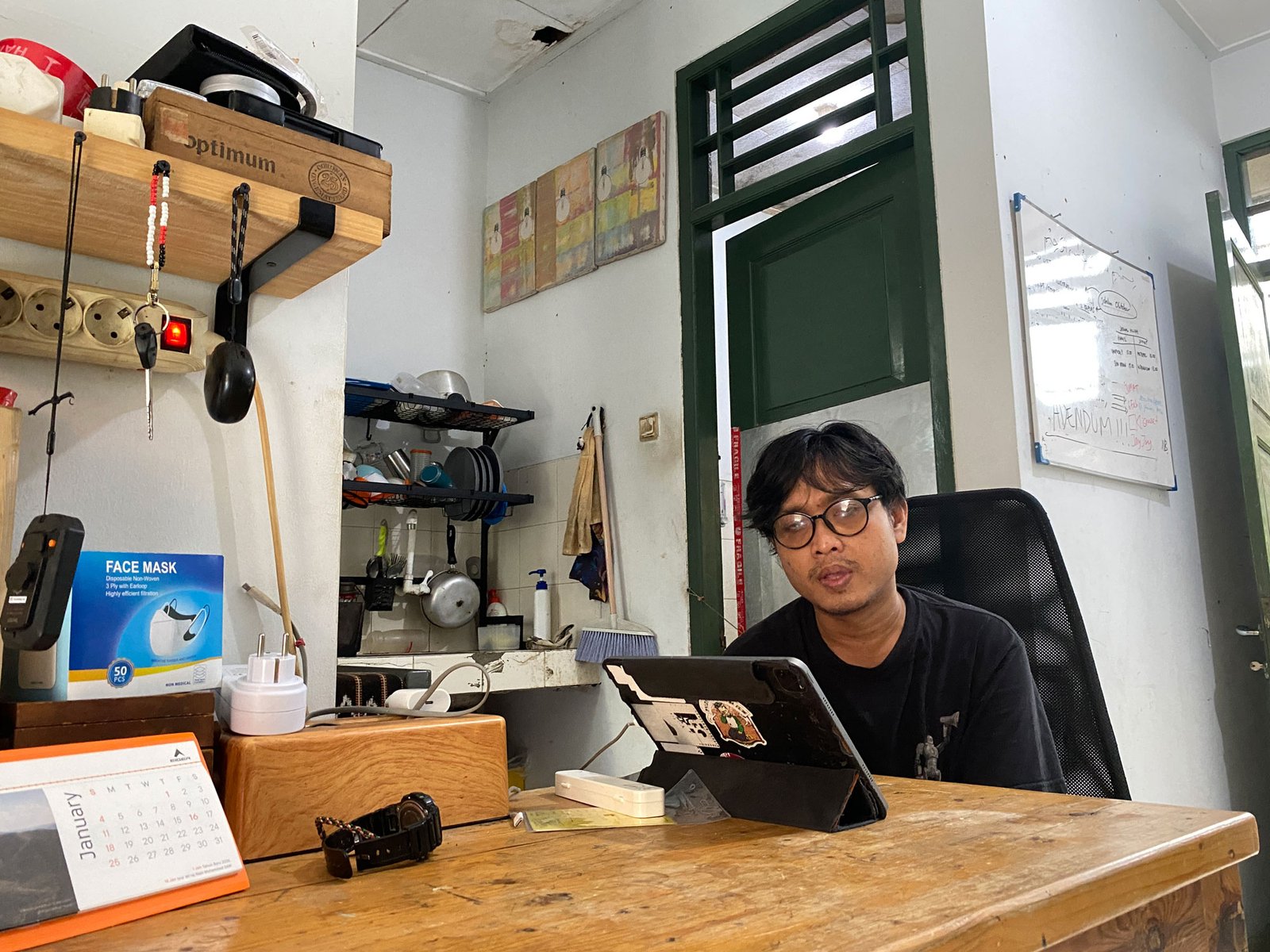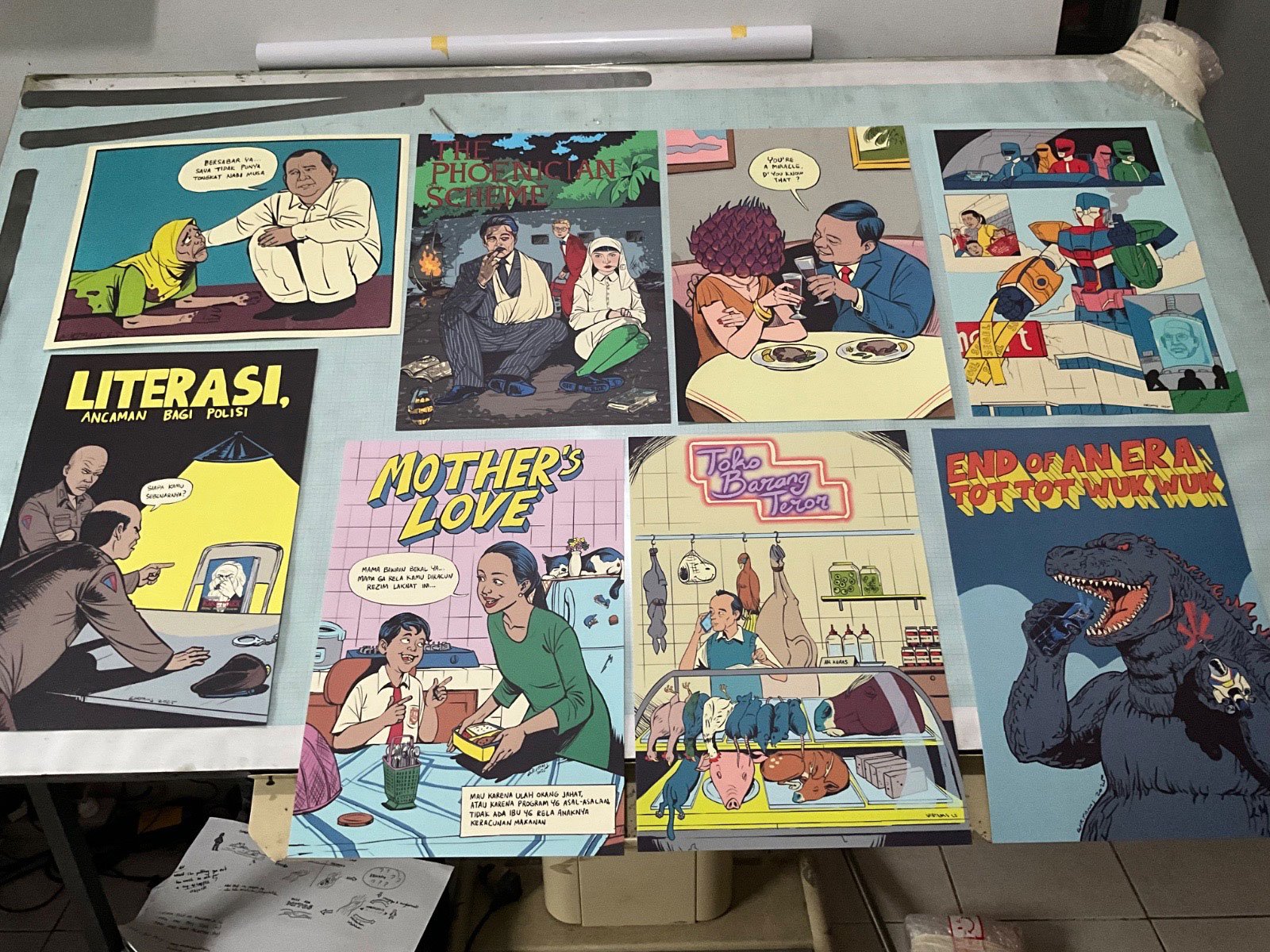
In 2018, Wiratama traveled from Medan to Jakarta to join Gudskul Studi Kolektif. He was one of the participants selected to live and study there for a year. Since then, Wiratama has been part of the Gudskul ecosystem. In this collective space, he often acts as a visual harvester, capturing conversations, discussions, and learning processes into graphic recordings or visual notes. He is also known as an artist who consistently creates opinion cartoons on social media as a form of visual criticism of public issues.
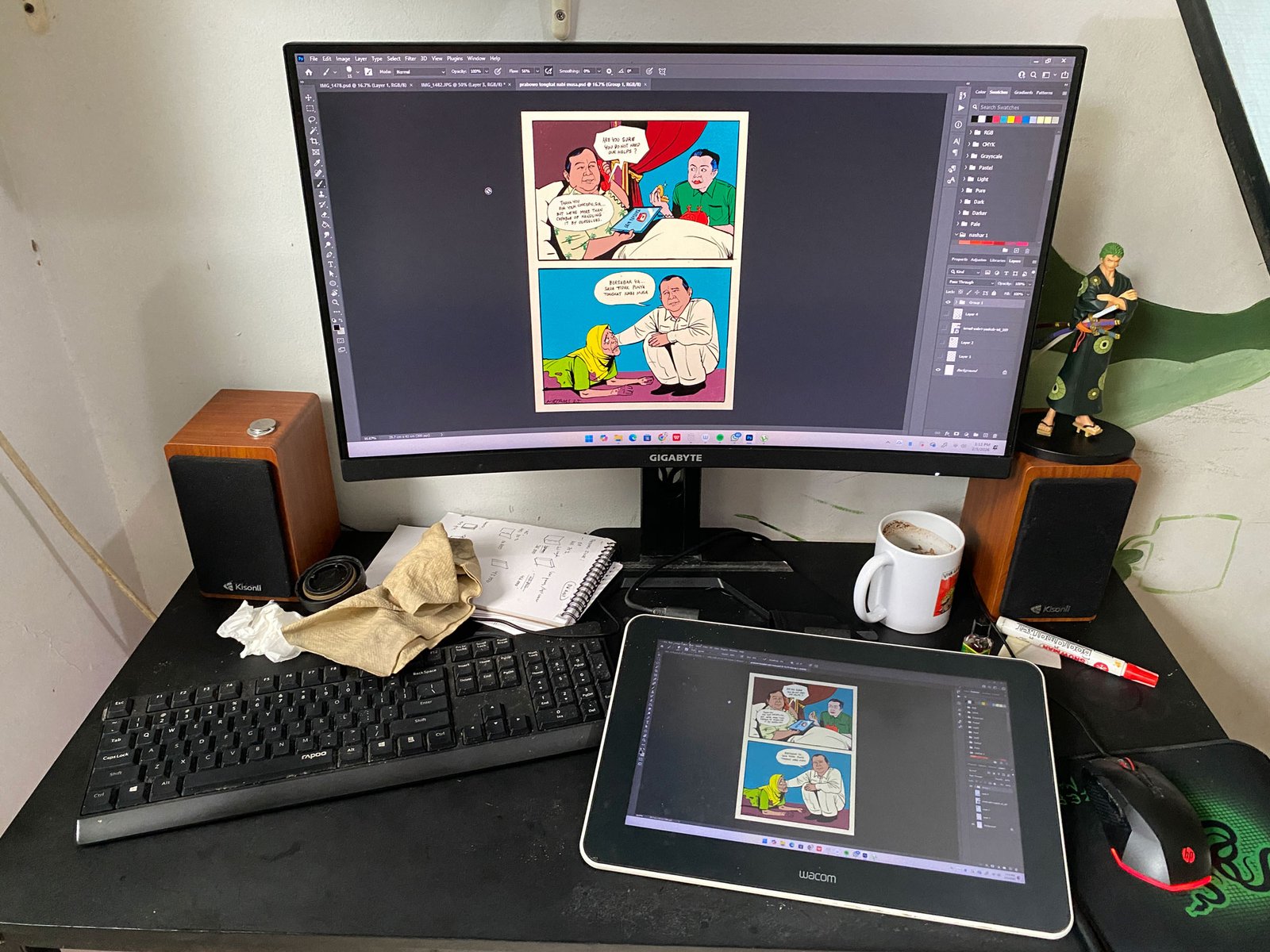
Creating opinion cartoons has become a daily routine for Wiratama. He works digitally, and his ideas often come from topics that are trending on Twitter (now X) and Instagram. But before he actually draws, he usually makes sure the context is clear. He reads several news sources he trusts, observes how the issue is reported, and then explores netizens’ comments, from recurring patterns of anger to the most trivial jokes.
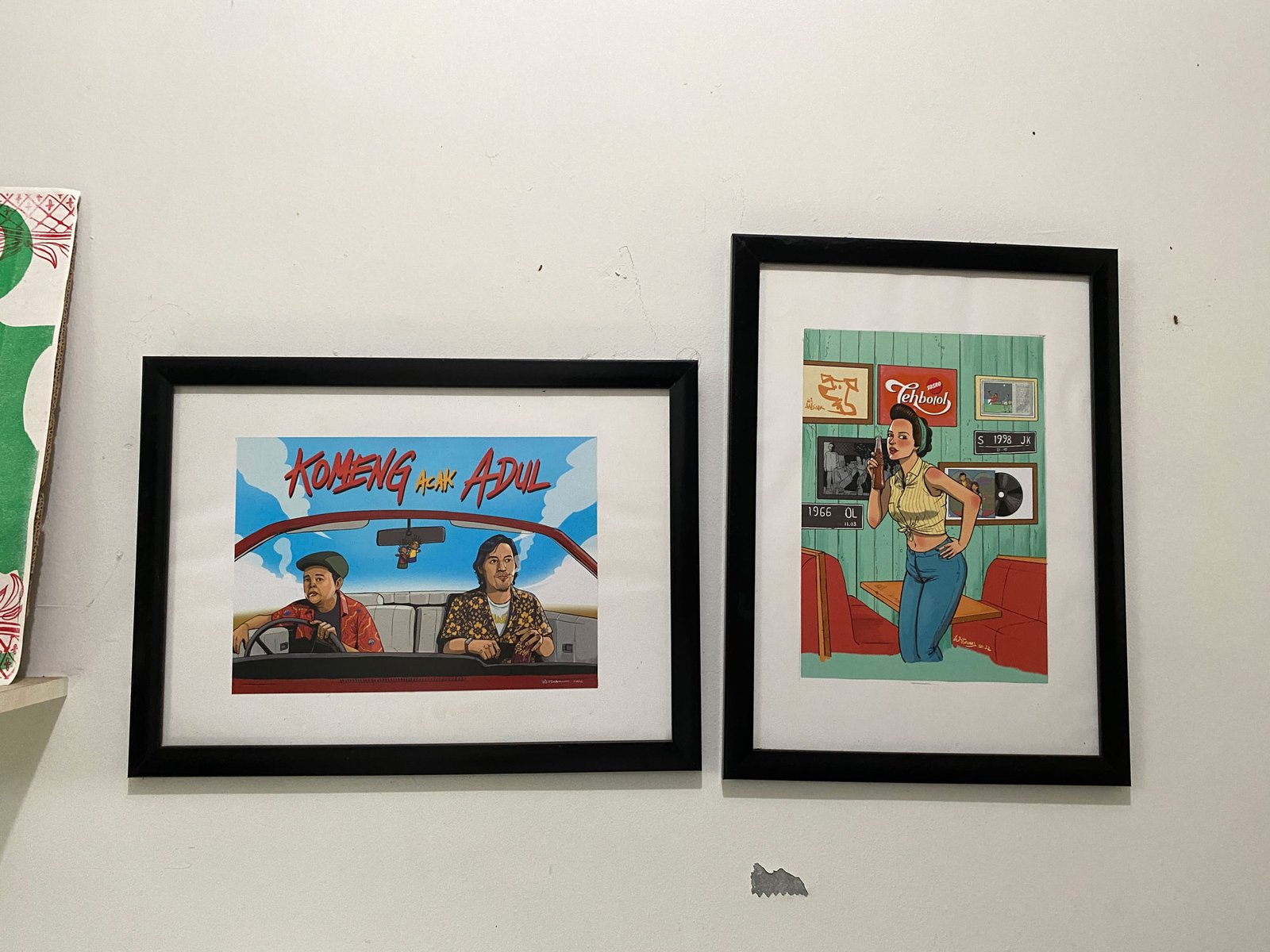
In transforming issues into visuals, Wiratama uses the concept of “what if.” What if political figures appeared in popular movie posters? What if public policy was treated like a soap opera scene? He connects issues with pop culture such as movies, posters, and memes, so that readers can easily recognize the context. The result is not just a news image, but a reaction to the news itself. Wiratama summarizes the concerns of netizens, public anxiety, and even collective fatigue in a single frame.
For Wiratama, drawing is his way of complaining. Previously, he often complained in the form of text tweets on Twitter, ranting through comments, and then moving on. However, when his complaints took the form of images, he realized that he had gathered people with the same concerns. Images became a new place for expressing opinions, a democratic space open to interpretation from various perspectives.
Of course, democratic spaces are always accompanied by pros and cons. This is where we see how exhausting fast, massive, and unpredictable digital interactions can be. Every second there are new comments, new responses, sometimes even new attacks. The number of opponents is countless. Discussions can turn into endless debates. “If you keep going, you’ll get a headache,” said Wiratama with a laugh.
This is where physical space becomes important, and Gudskul becomes another everyday space for Wiratama. Several times a week, he comes there. In addition to fulfilling his work schedule or attending meetings, he sometimes comes just to hang out and meet friends. There, the rhythm is different. There are no notifications that demand a quick response, no algorithms that silently break his concentration.
Conversations at Gudskul can jump from joking to serious in an instant. One of the hangout circles he joins is with Tim Aman, most of whom are local residents. Wiratama is interested in the way they joke: witty, spontaneous, and often born out of difficult situations. For him, it is like a broader reflection of Indonesian society in dealing with problems through humor. In situations like this, he prefers not to express his opinions directly as a form of activism, as he does in the digital space. He slips them in through shared conversations and laughter.
Hanging out at Gudskul is a way for him to fulfill his psychological needs while socializing. According to Wiratama, Gudskul has the resources, knowledge, and network he needs. Everything is there, from critical discourse to technical expertise. Regardless of all the dynamics, for him, Gudskul manages to maintain a balance between friendship and professionalism. In addition, Gudskul has a different atmosphere. Even though it is located in Jakarta, this space is not in the middle of the hustle and bustle of the city and traffic jams.
Between constantly moving device screens and slower hangout spaces, Wiratama found the distance he needed. On the one hand, he remained involved in the fast and noisy flow of public opinion. On the other hand, he had a space where opinions did not always have to be posted.
by Angga Wijaya
Subject coordinator at Gudskul Studi Kolektif and Wiratama’s neighbor